
 11
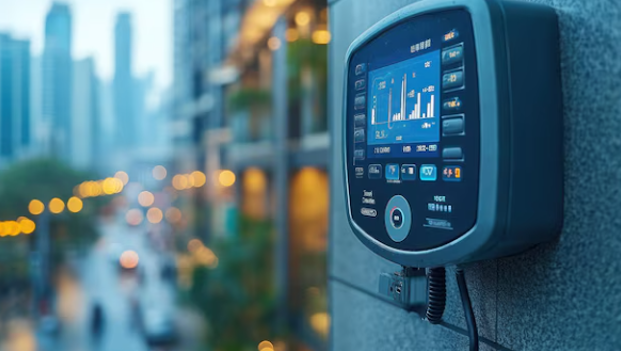
What enables utilities and enterprises to achieve precision, cost control, and operational visibility in energy and water management? Smart metering systems address these priorities through connected infrastructure and intelligent data exchange.
As digital transformation accelerates across utilities, efficient systems rely on advanced connectivity, automation, and analytics. The convergence of sensors, networks, and platforms has redefined how consumption data is captured, processed, and utilised at scale.
Core Components of an Efficient Smart Metering System
Efficient smart metering systems depend on tightly integrated components that operate in coordination. Each layer contributes to accuracy, reliability, and operational performance.
Key components:
• Smart meters with embedded sensors.
• Communication networks (cellular, LPWAN, NB-IoT).
• Head-end systems (HES).
• Meter data management systems (MDMS).
• Centralised IoT platform.
The IoT platform acts as the control layer, managing devices, data flow, and system orchestration across the infrastructure.
Role of Connectivity in System Performance
Connectivity defines how effectively data moves between meters and central systems. Poor connectivity leads to data gaps and operational inefficiencies.
Critical connectivity features:
• Wide-area coverage across urban and rural regions.
• Low latency for near real-time data transmission.
• Network redundancy for uninterrupted operations.
• Support for multiple communication standards.
A robust smart metering IoT framework relies on stable connectivity to maintain continuous data exchange and operational consistency.
Data Acquisition and Real-Time Monitoring
Efficient systems capture and transmit consumption data at regular intervals. This supports accurate billing and operational insights.
Capabilities enabled:
• Automated meter reading (AMR).
• Interval-based data collection.
• Instant anomaly detection.
• Load profiling and demand analysis.
A central IoT platform processes incoming data streams and converts them into actionable insights for utilities and enterprises.
Device Lifecycle Management
Managing thousands or millions of meters requires automated lifecycle control. Manual processes increase operational costs and delays.
Key lifecycle functions:
• Remote device provisioning.
• Firmware updates and diagnostics.
• Activation and deactivation of meters.
• Usage monitoring and reporting.
Platforms such as Airtel IoT Connectivity provide centralised control, enabling large-scale device management with minimal manual intervention.
Security Architecture in Smart Metering
Security remains a critical factor in system efficiency. Data integrity and network protection directly impact trust and compliance.
Essential security elements:
• SIM-based authentication.
• Encrypted communication channels.
• Secure private networks (APN).
• Access control mechanisms.
A well-designed smart metering IoT system reduces risks related to data breaches, tampering, and unauthorised access.
Scalability and Deployment Flexibility
Efficient systems must support expansion without disruption. Utilities often deploy smart meters in phases across large geographies.
Scalability requirements:
• Support for millions of connected devices.
• Bulk provisioning capabilities.
• Flexible deployment models.
• Integration with legacy infrastructure.
The IoT platform plays a critical role in scaling operations while maintaining performance consistency.
Integration with Enterprise Systems
Smart metering systems do not operate in isolation. Integration with enterprise platforms improves operational efficiency and decision-making.
Integration areas:
• Billing and revenue management systems.
• Customer relationship management (CRM).
• Analytics and reporting tools.
• Grid and asset management systems.
A connected smart metering IoT ecosystem enables data-driven operations across departments.
Advanced Analytics and Decision Intelligence
Data alone does not create value. Efficiency depends on how data is analysed and applied.
Analytics-driven benefits:
• Demand forecasting and load optimisation
• Identification of energy theft or leakage
• Predictive maintenance of infrastructure
• Consumption pattern analysis
An advanced IoT platform supports real-time analytics, enabling faster and more informed decision-making.
Comparison of Traditional Vs Smart Metering Systems
The table below highlights key differences in performance, efficiency, and operational capabilities.
Feature Traditional Metering Smart Metering Systems
Data Collection Manual Automated and real-time
Accuracy Prone to errors High precision
Operational Cost High Reduced over time
Monitoring Periodic Continuous
Scalability Limited Highly scalable
Integration Capability Minimal Extensive
Network Technologies Powering Smart Metering
Different communication technologies contribute to system efficiency depending on deployment requirements.
Common technologies:
• NB-IoT for low-power, wide-area connectivity
• LTE-M for mobility and extended coverage
• 4G/5G for high-speed data transmission
• RF mesh networks for localised communication
A hybrid approach strengthens the smart metering IoT infrastructure, balancing cost and performance.
Role of Automation in Operational Efficiency
Automation reduces manual intervention and enhances system responsiveness.
Automation benefits:
• Remote connect and disconnect of services
• Automated billing processes
• Instant alerts for faults or anomalies
• Reduced field visits
Solutions such as Airtel IoT Connectivity enable automation through centralised control and real-time monitoring capabilities.
Factors That Drive Efficiency
Efficient smart metering systems depend on multiple interconnected factors:
• Reliable and scalable connectivity
• Centralised IoT platform for control and analytics
• Strong security architecture
• Real-time data processing
• Automated device and system management
• Integration with enterprise ecosystems
Each factor contributes to improved operational performance and cost optimisation.
Next-Gen Outlook for Smart Metering
Smart metering systems are evolving with advancements in connectivity and analytics. The adoption of digital infrastructure continues to reshape utility operations.
Enterprises are prioritising:
• Data-driven decision frameworks
• Scalable smart metering IoT deployments
• Integration with smart grids and renewable energy systems
This evolution positions smart metering as a critical component of modern infrastructure.
Powering the Future of Smart Metering Efficiency
Efficient smart metering systems depend on connectivity, analytics, and scalable architecture working together. Organisations must prioritise reliable networks and centralised IoT platform capabilities to achieve operational efficiency. Strategic adoption of smart metering IoT enables cost optimisation and data-driven decisions. Explore Airtel IoT Connectivity to strengthen infrastructure and accelerate digital transformation in utility operations.